What Is AREDS2?
AREDS2 stands for the Age-Related Eye Disease Study 2 — a randomized, double-blind, placebo-controlled clinical trial funded by the National Eye Institute (NEI), part of the National Institutes of Health. It enrolled 4,203 participants aged 50–85 across 82 US clinical sites, ran for approximately 5 years (2006–2012), and was published in JAMA in 2013.
The original AREDS trial (completed in 2001) established that high-dose antioxidants plus zinc reduced the risk of progression from intermediate AMD to advanced AMD by about 25%. But that formula included beta-carotene, which was later found to increase lung cancer risk in smokers. AREDS2 was designed to:
- Test whether lutein and zeaxanthin could replace beta-carotene
- Test whether omega-3 fatty acids added further benefit
- Refine the zinc dose (80 mg vs 25 mg)
The answer: lutein/zeaxanthin was superior to beta-carotene and became the recommended formula. Omega-3s showed no additional benefit in this population.
The AREDS2 Formula: Exact Ingredients and Doses
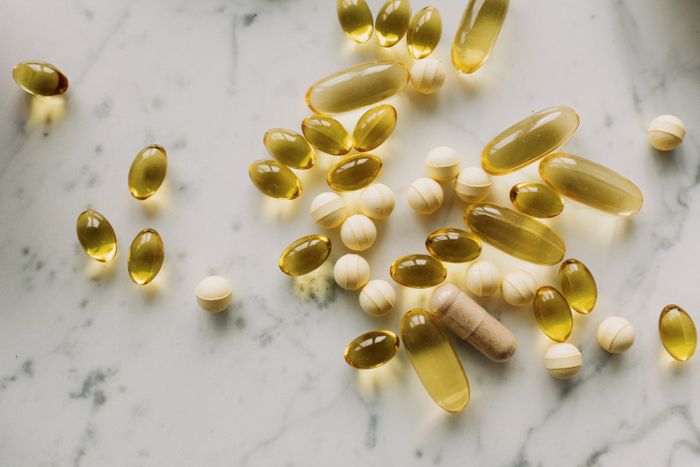
The AREDS2 supplement formula contains exactly six ingredients at these doses:
| Ingredient | Daily Dose (AREDS2) | Role |
|---|---|---|
| Lutein | 10 mg | Macular pigment formation; blue-light filtration |
| Zeaxanthin | 2 mg | Macular pigment co-factor; central vision protection |
| Vitamin C | 500 mg | Antioxidant protection of lens and retinal tissue |
| Vitamin E | 400 IU | Lipid peroxidation protection in retinal membranes |
| Zinc | 80 mg | Retinal enzyme function; supports vitamin A metabolism |
| Copper | 2 mg | Prevents zinc-induced copper depletion (added to AREDS2) |
Note: The original AREDS formula included beta-carotene (15 mg). AREDS2 replaced this with lutein/zeaxanthin. Current clinical recommendations specifically use the AREDS2 (lutein/zeaxanthin) formula, not the original beta-carotene version.
What the AREDS2 Study Found
The primary finding: participants with intermediate AMD in both eyes, or late AMD in one eye, who took the AREDS2 formula had a 25% reduced risk of progression to advanced AMD over 5 years compared to placebo. In the subgroup with the highest baseline dietary lutein/zeaxanthin intake (lowest supplementation need), the benefit was smaller; in those with low dietary intake, it was larger.
Key secondary findings from the 10-year AREDS2 follow-up study:
- The benefit persisted over 10 years of follow-up
- Lutein/zeaxanthin was associated with a 20% lower risk of neovascular (wet) AMD
- Those who took the original beta-carotene formula had higher lung cancer rates in current and former smokers
- Reducing zinc from 80 mg to 25 mg showed no significant difference in outcomes
Critically: AREDS2 did not show benefit in people with no AMD or early AMD. The formula addresses progression risk, not primary prevention in healthy eyes.
Who Should Take AREDS2 Supplements
The National Eye Institute and the American Academy of Ophthalmology recommend AREDS2 supplementation specifically for:
- Intermediate AMD in one or both eyes (confirmed by dilated exam)
- Late AMD (advanced/neovascular) in one eye
They do not recommend AREDS2 supplements for people with no AMD, early AMD (small drusen only), or as a general eye health supplement for healthy adults. The evidence for these populations is not established.
That said, many nutrition researchers and clinicians argue that lutein and zeaxanthin — at AREDS2 doses — represent reasonable nutritional insurance for adults 40+ with risk factors (family history, high-screen exposure, smokers, high UV exposure), even without diagnosed AMD. This is a risk-benefit judgment, not an evidence gap.
Want AREDS2 doses + botanicals?
VisiFlora delivers 20 mg lutein and 4 mg zeaxanthin plus the full AREDS2 stack and gut-barrier nutrients. iGenics delivers 20 mg lutein and 10 mg zeaxanthin (double and 5× the AREDS2 levels) plus bilberry 480 mg, saffron 20 mg, and turmeric with BioPerine — both backed by a money-back guarantee.
What AREDS2 Doesn't Cover
The AREDS2 formula is evidence-based and well-validated — but it was finalized in 2013 based on research from the 1990s and 2000s. Several important mechanisms have emerged in the research since then:
1. The Gut-Eye Axis
The AREDS2 formula contains no gut-barrier support nutrients. Research published in Investigative Ophthalmology & Visual Science has shown elevated plasma LPS (bacterial endotoxins from the gut) in AMD patients. A compromised gut barrier allows these toxins to reach the blood-retinal barrier, triggering inflammatory pathways that AREDS2 doesn't address. Quercetin, rutin, and grape seed extract have evidence for reinforcing this barrier — none are in AREDS2.
2. Saffron
A 2010 RCT in IOVS found that saffron (20 mg/day) improved ERG function in early AMD patients. Crocin and crocetin, the active compounds, appear to protect photoreceptors from oxidative damage through a mechanism distinct from the carotenoid-antioxidant pathway AREDS2 targets. Not in AREDS2.
3. Astaxanthin
Astaxanthin is a carotenoid with significantly higher antioxidant capacity than the vitamins C and E in AREDS2 — approximately 550× vitamin E in lipid peroxidation models. It crosses the blood-retinal barrier and is one of the few antioxidants with direct evidence for reducing eye fatigue in screen workers. Not in AREDS2.
4. Anti-inflammatory botanicals
Bilberry anthocyanins support retinal microcirculation. Turmeric curcumin (with bioavailability enhancers) reduces inflammatory cytokines implicated in AMD progression. Ginkgo biloba improves ocular blood flow. None are in the AREDS2 formula — not because they lack evidence, but because they weren't the focus of the AREDS2 research question.
Beyond AREDS2: What Newer Formulas Add
The practical upshot: AREDS2 defines the minimum evidence-based nutritional floor for AMD risk. It doesn't represent the ceiling of what's nutritionally relevant for eye health. Newer formulas attempt to build on AREDS2 by:
- Exceeding AREDS2 carotenoid doses (e.g., lutein 20 mg vs 10 mg)
- Adding botanicals with independent research: bilberry, saffron, turmeric, ginkgo
- Addressing gut-barrier integrity (the LPS pathway)
- Including astaxanthin for broader retinal antioxidant coverage
These additions are scientifically coherent but lack the large-scale RCT evidence that AREDS2 has. The AREDS2 evidence base (4,203 participants, 5-year follow-up, NIH funding) remains the benchmark against which all eye supplements should be evaluated — and currently, nothing else comes close to matching it in methodological rigor.