What Is Astaxanthin?
Astaxanthin is a xanthophyll carotenoid — structurally related to beta-carotene and lutein, but with a distinct molecular architecture that gives it unique biological properties. Its primary commercial source is the freshwater microalgae Haematococcus pluvialis, which produces astaxanthin as a protective pigment in response to UV radiation, nutrient deprivation, or temperature stress.
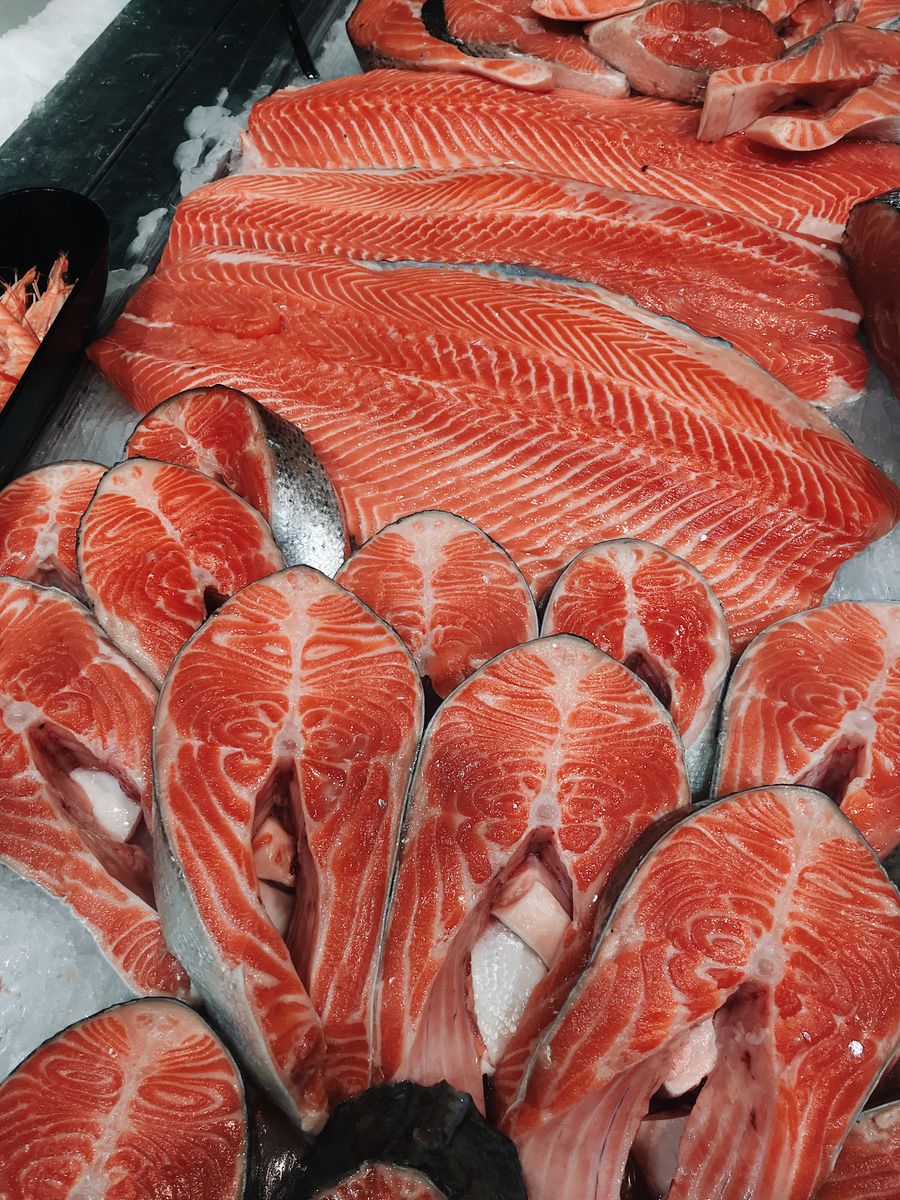
When marine animals consume this algae — either directly or through the food chain — astaxanthin accumulates in their tissues. It's the compound responsible for the characteristic pink-red coloration of wild salmon, shrimp, lobster, and flamingos. Wild sockeye salmon contains approximately 4–5 mg astaxanthin per 100g serving; farmed Atlantic salmon typically receives synthetic astaxanthin in feed to achieve the same appearance.
For supplement use, astaxanthin is either extracted from cultivated H. pluvialis (natural, predominantly the 3S,3'S stereoisomer) or produced via chemical synthesis (racemic mixture). Natural and synthetic astaxanthin differ in their stereoisomeric profiles, which may affect bioavailability and activity — most clinical research uses natural astaxanthin from algae.
Why Astaxanthin Reaches the Retina — and Most Antioxidants Don't

The retina is one of the most metabolically active tissues in the body — and one of the most protected. The blood-retinal barrier (BRB) is a tight-junction epithelium that controls what enters retinal tissue from the bloodstream, analogous to the blood-brain barrier. Most water-soluble antioxidants, including vitamin C, cannot cross it efficiently.
Astaxanthin is lipid-soluble. It incorporates into lipoprotein particles, crosses the BRB via passive diffusion through lipid membranes, and accumulates in retinal tissue. Retinal distribution studies in animals confirm astaxanthin accumulation in photoreceptor outer segments and the retinal pigment epithelium — precisely the structures most vulnerable to oxidative damage.
This is not true of all carotenoids. Lutein and zeaxanthin are also lipid-soluble and cross the BRB — they concentrate in the macula specifically, forming macular pigment. Astaxanthin is more widely distributed across retinal layers and does not concentrate in the macula to the same degree. This means lutein and zeaxanthin are not replaceable by astaxanthin for macular pigment density; they address different structural locations within the retina.
Astaxanthin also has a distinctive molecular structure: its polar end groups anchor on both sides of a cell membrane simultaneously, allowing it to span the entire lipid bilayer. This gives it broader spatial antioxidant coverage than beta-carotene or alpha-tocopherol, which sit within one layer of the membrane.
4 Mechanisms of Action for Eye Health
1. Lipid-Phase Antioxidant Protection
In lipid peroxidation assays, astaxanthin's antioxidant capacity has been measured at approximately 550× vitamin E and 6,000× vitamin C (Naguib 2000, Archives of Biochemistry and Biophysics). Retinal photoreceptor outer segments are especially rich in polyunsaturated fatty acids (docosahexaenoic acid, DHA) — precisely the type of lipid most vulnerable to oxidative chain reactions. Astaxanthin's lipid-phase activity makes it particularly relevant in this context.
This does not mean astaxanthin is simply "stronger" than other antioxidants — different antioxidants protect different molecular compartments (water vs. lipid phases, different parts of the cell membrane). Astaxanthin complements rather than replaces vitamins C and E.
2. Ciliary Muscle Fatigue Reduction
The ciliary muscle controls lens shape for near-focus accommodation. During sustained screen work, continuous near-focus keeps the ciliary muscle contracted for hours — the muscular equivalent of holding a fist clenched all day. This produces the "eye fatigue" or "eye strain" most screen workers experience.
Astaxanthin has RCT-level evidence for this specific mechanism. A 2002 randomized controlled trial by Nakamishi et al. (Investigative Ophthalmology & Visual Science) found that 6 mg/day astaxanthin for 4 weeks significantly improved accommodation amplitude and reduced subjective eye fatigue symptoms in VDT (visual display terminal) workers compared to placebo. The proposed mechanism: astaxanthin's antioxidant action in the mitochondria-dense ciliary muscle cells reduces oxidative stress-driven fatigue.
3. Blue Light Oxidative Load
High-energy visible light (HEV, 415–455 nm — "blue light") generates reactive oxygen species in photoreceptor outer segments when absorbed by retinal chromophores. This photo-oxidative load is a proposed mechanism in light-accelerated macular damage. Astaxanthin's lipid-phase antioxidant activity may help quench these reactive species before they damage photoreceptor membranes — though direct human RCT evidence for this specific mechanism remains limited.
4. Anti-Inflammatory Signaling
Astaxanthin has been shown in in vitro and animal models to inhibit NF-κB signaling, suppress inflammatory cytokines (TNF-α, IL-6), and reduce prostaglandin production. Chronic low-grade inflammation is implicated in AMD progression, diabetic retinopathy, and glaucoma. Whether these anti-inflammatory effects translate to clinical benefit in human retinal disease requires larger-scale trials.
Clinical Evidence: What RCTs Actually Show
| Study | Dose / Duration | Finding |
|---|---|---|
| Nakamishi et al. 2002 (IOVS) | 6 mg/day · 4 weeks · VDT workers | Significant improvement in accommodation amplitude; reduced eye fatigue vs placebo |
| Takahashi & Kajita 2005 | 6 mg/day · 4 weeks | Improved accommodation response and reduced asthenopia symptoms (replicated Nakamishi) |
| Giannaccare et al. 2021 (Nutrients) | 6 mg/day · 12 weeks · AMD patients | Improved macular pigment optical density and visual acuity in early AMD |
| Liao et al. 2023 (Nutrients) | 6 mg/day · 4 weeks · screen workers | Reduced eye fatigue and dry eye symptoms; improved tear film stability |
Honest assessment: The astaxanthin eye health evidence base is smaller and less rigorously funded than the AREDS2 lutein/zeaxanthin research. Most studies are smaller (n=20–100) and shorter (4–12 weeks) than the large NIH trials. The accommodation/fatigue evidence is the most consistent across multiple RCTs. Evidence for AMD progression benefit is promising but preliminary. Anyone citing astaxanthin as a replacement for AREDS2 components is overstating the current data.
Both VisiFlora and iGenics include astaxanthin
VisiFlora includes astaxanthin as part of its full 22-ingredient formula alongside the complete AREDS2 stack and gut-barrier nutrients. iGenics contains 4 mg astaxanthin combined with lutein 20 mg, zeaxanthin 10 mg, bilberry 480 mg, saffron 20 mg, and turmeric with BioPerine.
Dosing and Food Sources
Studied Supplement Doses
Eye health RCTs consistently use 4–6 mg/day as the therapeutic dose. Lower doses (1–2 mg) may provide antioxidant benefit but haven't been tested in ocular accommodation studies. Higher doses (12–20 mg) have been used in other health contexts (cardiovascular, muscle recovery) without safety concerns.
Astaxanthin is fat-soluble — absorption is significantly enhanced when taken with a meal containing dietary fat. Studies using oil-based softgel formulations show better bioavailability than powder-filled capsules.
Food Sources
Food sources provide meaningful amounts only in seafood-rich diets:
- Wild sockeye salmon: ~4.5 mg/100g (highest commonly available food source)
- Wild rainbow trout: ~5.5 mg/100g
- Arctic shrimp: ~1.2 mg/100g
- Lobster: ~1.0 mg/100g (shell primarily)
- Farmed Atlantic salmon: typically receives synthetic astaxanthin in feed; amounts vary but are generally comparable to wild
To reach 6 mg/day from food alone, you'd need approximately 130g of wild sockeye salmon daily — achievable in high-seafood diets but unlikely for most people. Supplementation is the practical route for consistent therapeutic doses.
Which Supplements Contain Astaxanthin
Most general multivitamins and AREDS2 formulas do not include astaxanthin. It appears primarily in specialty eye health formulas and sport/recovery supplements:
- iGenics: 4 mg astaxanthin per serving, alongside lutein 20 mg, zeaxanthin 10 mg, bilberry, saffron, and turmeric. Sourced from H. pluvialis. → iGenics full review
- VisiFlora: includes astaxanthin as part of its 22-ingredient formula alongside the full AREDS2 stack and gut-barrier nutrients. → VisiFlora full review
When evaluating any astaxanthin supplement, check: the source (H. pluvialis vs synthetic), the dose (≥4 mg for eye health), and whether it's in an oil-based softgel (better absorption than powder).