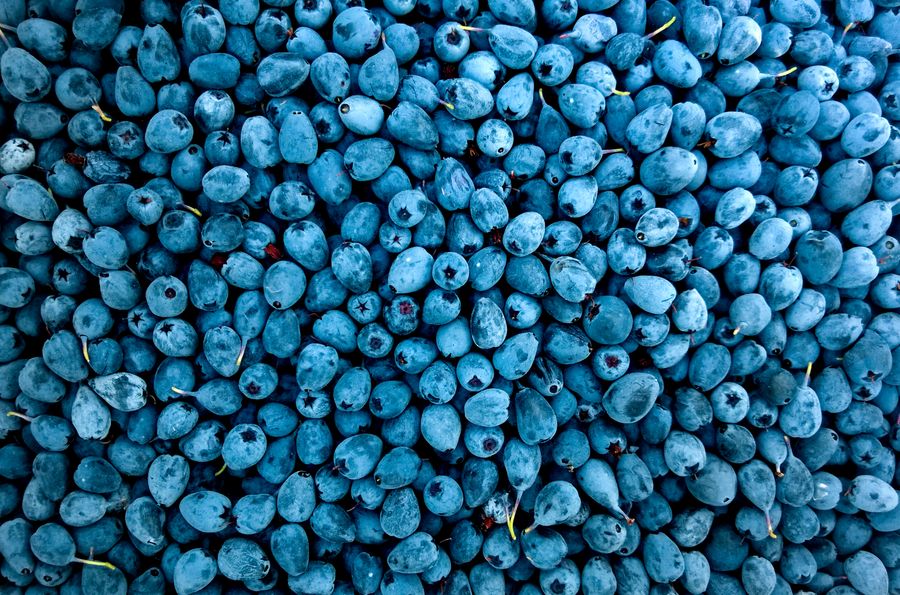
What Is Bilberry Extract?
Bilberry (Vaccinium myrtillus) is a small, dark-purple berry native to Northern and Central Europe — a wild relative of the American blueberry, but smaller, tarter, and with flesh that's deep purple all the way through (common blueberry flesh is pale green; only the skin is pigmented). That deeper pigmentation reflects a higher concentration of anthocyanins, the flavonoid compounds responsible for bilberry's color and most of its studied biological activity.
Supplement-grade bilberry extract is standardized to a specific anthocyanoside content — most commonly 25%, under the trade name Mirtoselect, the extract used in the majority of published clinical research. This matters because "bilberry" on a label can mean anything from a standardized 25% extract to unstandardized fruit powder with a trace, unmeasured anthocyanin content.
The WWII Pilot Myth — and Why It Doesn't Hold Up

The bilberry-and-night-vision story is one of the most repeated pieces of supplement folklore in existence: British Royal Air Force pilots during World War II reportedly ate bilberry jam before night missions and reported sharper night vision as a result. It's a compelling anecdote — and it is exactly that, an anecdote. There was no control group, no measurement instrument, and no peer-reviewed publication behind it. It appears to originate from informal wartime accounts rather than any documented trial.
When researchers went looking for an objective effect decades later, the results were unimpressive. A review by Levy & Rifkind (2006, Journal of the American Optometric Association lineage literature) examined placebo-controlled trials testing bilberry anthocyanosides against scotopic (low-light) vision, dark adaptation speed, and night-driving performance in healthy subjects — and found no consistent, statistically robust improvement. Several small early trials reported positive results, but they were not reproduced under better-controlled, blinded conditions.
Honest assessment: if a product markets bilberry specifically as a "night vision" ingredient, that claim is running ahead of the evidence. This doesn't mean bilberry is worthless — it means its real value lies in a different, less marketable mechanism.
What the Research Actually Supports
Bilberry anthocyanosides have well-documented antioxidant activity and a more specific, better-supported role in retinal microcirculation — the health of the tiny capillaries that feed the retina. Two mechanisms are most frequently studied:
1. Capillary Wall Stabilization
Anthocyanosides have been shown to strengthen collagen cross-linking in capillary walls and reduce capillary permeability in laboratory and animal models. Fragile, "leaky" retinal capillaries are a central feature of diabetic retinopathy, where damaged microvessels leak fluid and blood into retinal tissue. This is the strongest and most mechanistically coherent rationale for bilberry in an eye health context — not night vision, but vascular integrity.
2. Antioxidant / Anti-Inflammatory Activity
Like other anthocyanin-rich botanicals, bilberry extract scavenges reactive oxygen species and has shown anti-inflammatory activity in preclinical models. This overlaps with — but is generally considered weaker in magnitude than — the antioxidant profile of dedicated carotenoids like astaxanthin or lutein/zeaxanthin. Bilberry's antioxidant contribution in an eye supplement is best understood as complementary, not a primary active ingredient.
Small human trials combining bilberry extract with other antioxidants have reported reductions in visual fatigue/asthenopia symptoms after sustained near-work, but these studies are limited by small sample sizes and the use of multi-ingredient formulas, which makes isolating bilberry's individual contribution difficult.
Clinical Studies at a Glance
| Study / Review | Focus | Finding |
|---|---|---|
| Levy & Rifkind 2006 (review) | Night vision / dark adaptation in healthy adults | No consistent objective improvement across well-controlled trials |
| Preclinical capillary studies (various, 1980s–2000s) | Capillary wall permeability & collagen cross-linking | Anthocyanosides reduce capillary fragility and permeability in lab models |
| Small RCTs, diabetic retinopathy populations | Retinal microvascular markers | Some improvement in capillary resistance measures; small sample sizes |
| Multi-ingredient asthenopia trials (Japan, 2000s) | Visual fatigue after near-work, combined with other antioxidants | Reduced subjective eye fatigue; bilberry's isolated contribution unclear |
Bottom line: bilberry's evidence base is a mix of solid mechanistic/preclinical support for capillary health and a genuinely debunked headline claim (night vision). Treat it as a modest, complementary vascular-support ingredient in a broader formula — not a standalone solution, and not a substitute for the AREDS2 carotenoids (lutein, zeaxanthin) with far stronger clinical trial backing.
iGenics includes bilberry — VisiFlora takes a different vascular-support route
iGenics contains 480 mg of bilberry extract alongside lutein 20 mg, zeaxanthin 10 mg, saffron 20 mg, astaxanthin, and turmeric with BioPerine. VisiFlora doesn't include bilberry, but addresses microvascular and gut-barrier support through its own trio — quercetin, rutin, and grape seed extract — alongside the full AREDS2 carotenoid stack.
Dosing and Label-Reading
Studied Doses
Most published research uses 160–480 mg/day of bilberry extract standardized to 25% anthocyanosides (roughly 40–120 mg of anthocyanosides). Doses this consistent are almost exclusively achieved through standardized extract, not fresh fruit or unstandardized powder.
How to Read a Bilberry Label
- Look for a stated standardization: "Bilberry extract (25% anthocyanosides)" is meaningfully different from "bilberry fruit powder" with no percentage listed.
- Check the milligram amount, not just the ingredient name: a formula listing "bilberry" at 20 mg is providing a token amount compared to the 160–480 mg used in research.
- Don't pay a premium for "night vision" marketing claims — the evidence doesn't support that specific benefit, regardless of price point.
Which Supplements Contain Bilberry
Bilberry appears in a subset of eye health formulas, usually alongside other carotenoids rather than as a standalone product:
- iGenics: 480 mg bilberry extract per serving, combined with lutein 20 mg, zeaxanthin 10 mg, saffron 20 mg, and astaxanthin. → iGenics full review
- VisiFlora: does not include bilberry; addresses similar vascular-support goals through quercetin, rutin, and grape seed extract alongside the full AREDS2 stack. → VisiFlora full review